Floors Designed for Business Operations
Commercial Epoxy Flooring in El Paso for warehouses, retail facilities, restaurants, and office spaces with heavy-traffic performance requirements
El Paso's commercial properties face flooring demands that range from forklift traffic in warehouses to constant foot traffic in retail environments and hygiene requirements in restaurant kitchens. Commercial epoxy flooring systems are engineered for heavy-traffic performance, easy maintenance benefits, and safety and compliance options that residential systems don't address. National Contracting Epoxy & Coatings installs industrial-grade coatings designed to handle the specific load types, chemical exposures, and cleaning protocols each business requires.
Warehouses and retail facilities need floors that resist impact from dropped merchandise, abrasion from rolling carts, and point loads from shelving systems. Restaurant and office flooring must meet health codes or corporate standards while withstanding the cleaning frequency these environments demand. Fast installation timelines minimize business disruption, with many projects completed during off-hours or over weekends to avoid interrupting operations.
Request a commercial bid that addresses your facility's traffic patterns, load requirements, and any industry-specific compliance standards.
What Commercial Systems Actually Accomplish
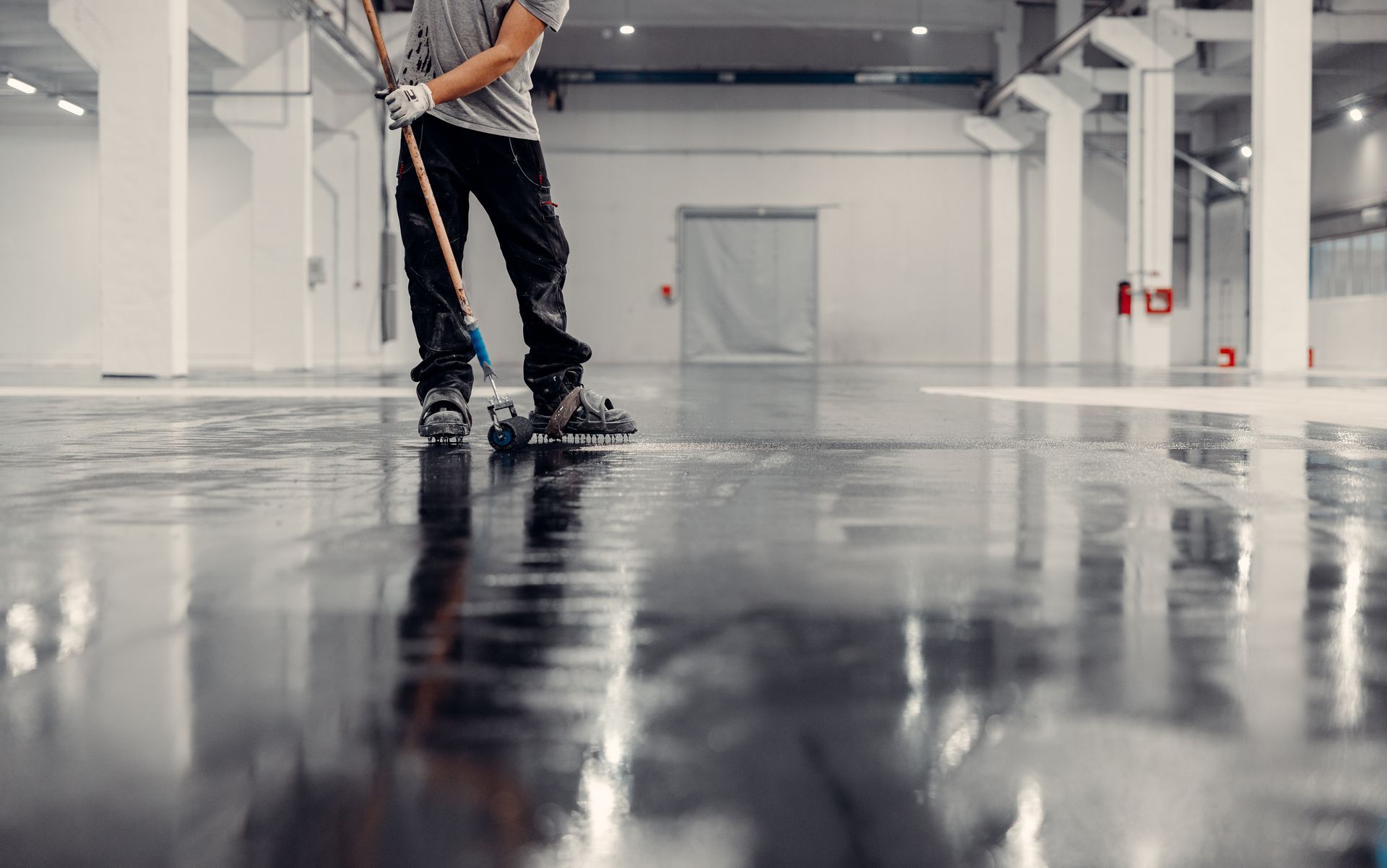
Commercial installations involve thicker build-ups than residential systems, often including multiple base coats and specialized topcoats formulated for specific industries. Food service facilities receive antimicrobial additives and seamless cove bases that prevent bacterial growth at floor-wall junctions. Retail spaces get high-gloss topcoats that enhance lighting and maintain appearance under constant foot traffic. Warehouse systems include aggregate for traction and extra thickness to handle forklift and pallet jack traffic without cracking.
National Contracting Epoxy & Coatings matches coating specifications to operational demands, ensuring the system tolerates your facility's specific wear patterns. Once installed, the floor handles daily cleaning with industrial equipment, resists staining from spills, and maintains a professional appearance without requiring frequent refinishing. The non-porous surface prevents moisture accumulation and makes it easier to meet health inspection standards in food service environments.
Safety and compliance options include slip-resistant textures for wet environments, color-coded zones for traffic management, and coatings that meet USDA or FDA standards for food processing areas. Installation scheduling is coordinated around your business hours to reduce downtime, with sections completed in phases if necessary to keep parts of the facility operational during the project.
What Business Owners Usually Ask
Commercial clients need to understand how epoxy flooring affects operations, maintenance, and long-term costs compared to other flooring options.
What makes epoxy suitable for forklift and heavy equipment traffic?
Properly installed commercial systems cure to compressive strengths that resist point loads from equipment wheels and legs without cracking, while the bonded surface doesn't delaminate under the shear forces that rolling traffic creates.
How does epoxy flooring reduce maintenance costs?
The sealed, non-porous surface requires only routine mopping with standard cleaners rather than stripping and waxing, and it doesn't harbor dust or bacteria in surface pores the way bare concrete does.
When should we schedule installation to minimize business disruption?
Most commercial projects are scheduled during nights, weekends, or planned shutdown periods, with fast-cure systems available that allow limited foot traffic within hours and full traffic within 24 hours in El Paso's warm climate.
What's the difference between warehouse epoxy and retail flooring systems?
Warehouse systems prioritize thickness and impact resistance with textured finishes for traction, while retail systems emphasize gloss, appearance retention, and smooth surfaces that accommodate different footwear types.
Why do restaurant kitchens need specialized coatings?
Commercial kitchens require antimicrobial properties, resistance to hot liquids and grease, seamless installation to prevent bacterial growth in joints, and slip-resistant texture that remains effective when wet.
National Contracting Epoxy & Coatings provides facility assessments that identify load requirements, chemical exposures, and compliance needs specific to your industry. Contact us to discuss installation scheduling and coating specifications that support your business operations without extended downtime.