Protective Systems for Commercial Concrete Surfaces
Concrete Coatings in El Paso for surfaces exposed to moisture, UV degradation, and surface wear
Unprotected concrete in El Paso weathers rapidly under intense UV exposure combined with low humidity cycles that draw moisture out of the substrate, creating surface spalling and aggregate exposure within years of installation. National Contracting Epoxy & Coatings applies protective coating systems that seal concrete porosity and create a barrier against moisture intrusion, whether from storm runoff on exterior slabs or condensation on interior warehouse floors. These systems restore weathered surfaces while preventing the freeze-thaw damage that occurs when trapped moisture expands during winter temperature drops.
Coating selection depends on substrate location and exposure, with UV-stable formulations used for outdoor applications where sunlight would yellow or chalk standard resins, and moisture-mitigating primers applied to slabs with high vapor transmission that would blister impermeable coatings. Decorative finishes incorporate color flakes or metallic pigments that hide surface imperfections while adding slip resistance, turning damaged concrete into finished architectural surfaces suitable for retail or office environments.
Request a detailed estimate that accounts for current surface condition and the environmental exposure your concrete experiences.
How Protective Coating Extends Concrete Lifespan
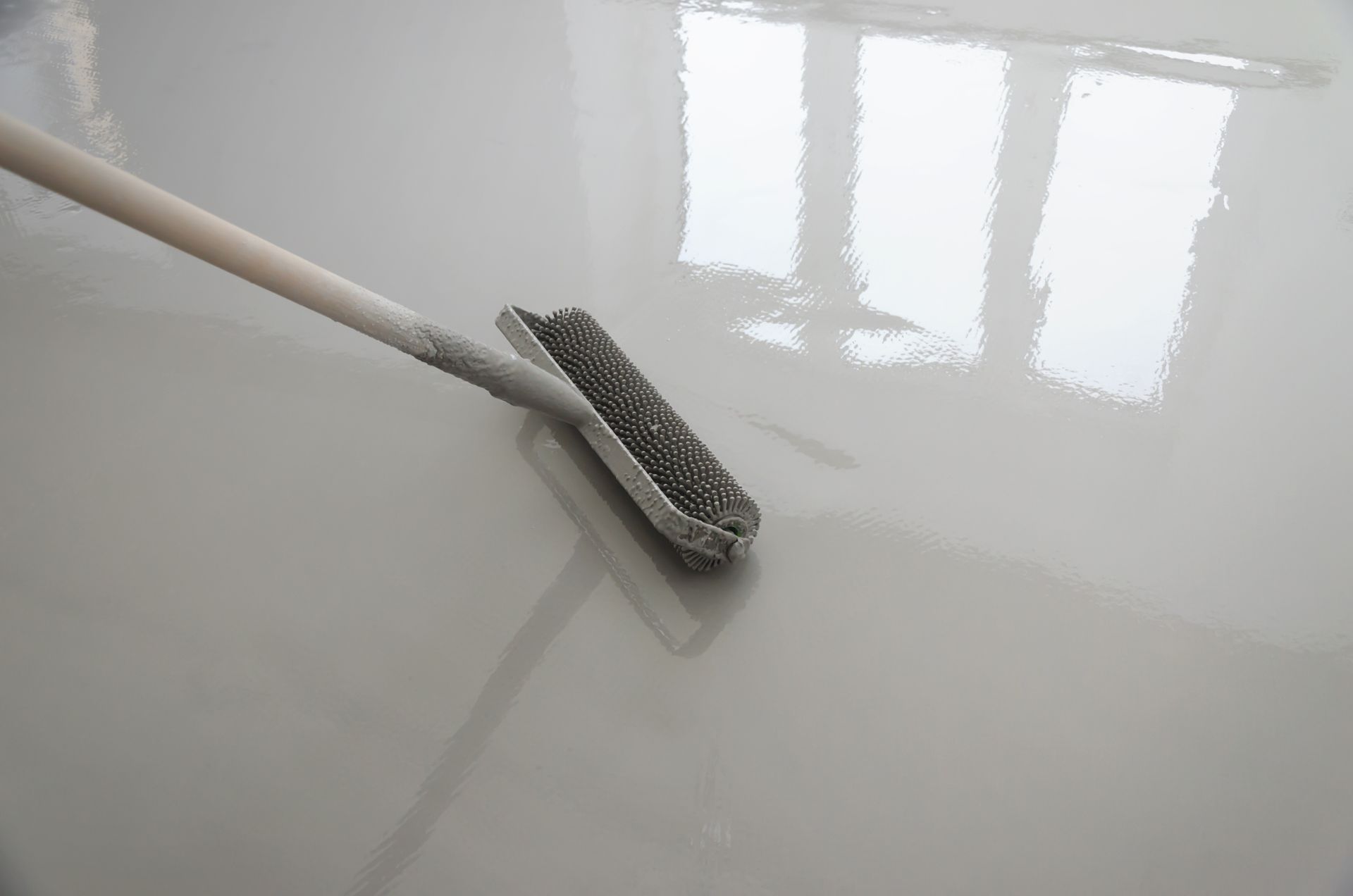
The coating application process addresses existing damage before protection is applied, filling surface cracks and leveling spalled areas so the finished surface presents a uniform appearance and thickness. Moisture testing determines if vapor barriers are needed or if breathable systems should be used to prevent trapped moisture from lifting the coating. Surface profiling removes laitance and opens concrete pores so the primer penetrates rather than sitting on top as a separate layer prone to peeling.
After installation, the concrete surface sheds water instead of absorbing it, preventing the saturation that leads to efflorescence, scaling, and rebar corrosion in reinforced slabs. The sealed surface resists oil staining in parking areas and chemical etching in commercial kitchens, maintaining a cleanable finish where contaminants wipe away rather than penetrating into the substrate. UV-stable topcoats prevent the chalking and color fading that ages unprotected exterior concrete, keeping the surface appearance consistent across years of sun exposure.
Interior applications benefit from reduced dust generation since the coating binds surface particles that would otherwise abrade loose and circulate through HVAC systems. Exterior systems include slip-resistant additives that maintain traction when wet, addressing liability concerns for walkways and entryways. The protective layer also simplifies maintenance by creating a non-porous surface that requires only routine cleaning rather than periodic sealing and repair.
Common Coating Application Questions
Property managers typically ask about application timing, surface preparation requirements, and how long the protection lasts under different exposure conditions.
What surface conditions prevent coating installation?
Active moisture infiltration, structural cracking that continues to move, and contamination from oils or curing compounds must be resolved before coating can bond effectively to the substrate.
How does El Paso's climate affect coating performance?
Low humidity accelerates cure times but also increases the risk of surface drying before the coating fully bonds, requiring application timing that avoids midday heat and direct sun exposure during installation.
When should decorative coatings be used versus clear protective systems?
Decorative systems hide surface discoloration and minor damage while adding color and texture, whereas clear coatings preserve the existing concrete appearance and are chosen when the substrate color and finish are already acceptable.
Why do some coatings yellow or peel after installation?
UV exposure degrades non-stabilized resins, and improper surface preparation leaves contaminants that prevent chemical bonding, causing the coating to lift as a film rather than adhering as an integrated layer.
What distinguishes interior and exterior coating formulations?
Exterior systems include UV inhibitors and higher flexibility to accommodate thermal expansion, while interior formulations prioritize hardness and abrasion resistance since sunlight degradation is not a factor.
National Contracting Epoxy & Coatings evaluates your concrete surface to determine which coating system matches the exposure and use pattern the slab experiences. Arrange a property assessment to review substrate condition and protection requirements.