Floors Built for Automotive Environments
Garage Floor Coatings in El Paso for oil and stain resistance, hot tire protection, and surfaces that withstand dropped tools
Bare concrete in residential garages absorbs automotive fluids, degrades under thermal cycling from hot tires, and dusts constantly as surface particles break free. Residential garage coatings create an impermeable barrier that prevents staining and surface erosion. National Contracting Epoxy & Coatings applies systems formulated specifically for the conditions garages create: chemical exposure, thermal stress, and impact from equipment and vehicles.
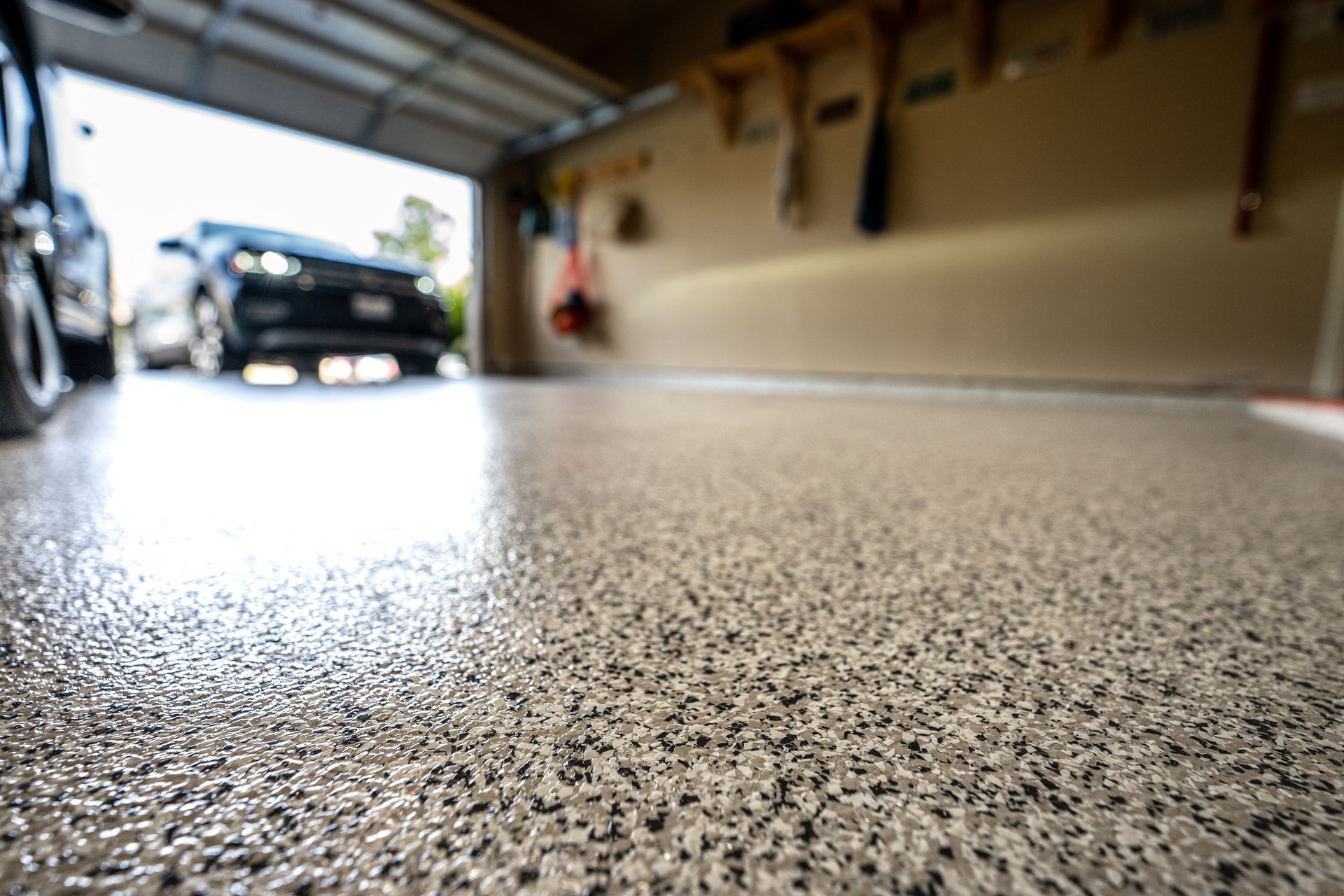
Oil and stain resistance keeps brake fluid, coolant, and gasoline from penetrating the surface and leaving permanent marks. Hot tire protection means the coating doesn't soften or lift when vehicle tires transfer heat directly to the floor after highway driving. Crack repair preparation addresses existing concrete damage before coating application, preventing those cracks from telegraphing through the new surface and compromising adhesion.
Request a quote that accounts for your garage's current condition, including crack repair and surface preparation requirements.
Why Garage Coatings Outlast Paint and Sealers
Epoxy-based garage coatings cure through chemical reaction rather than evaporation, forming a cross-linked polymer that bonds to the concrete at a molecular level. This differs from garage floor paint, which dries by solvent evaporation and remains a separate layer that peels under tire friction and chemical exposure. Long-lasting durability depends on both the coating chemistry and the concrete preparation that allows proper bonding.
After the coating cures, you can drive vehicles in and out without leaving tire marks or wearing through the surface in traffic paths. Spilled fluids wipe up completely without staining the concrete underneath. The sealed floor doesn't generate dust, keeping your garage cleaner and preventing fine concrete particles from settling on vehicles and equipment. Decorative finish options include solid colors, flake systems, and clear coats over stained concrete, depending on your aesthetic preferences.
Garage coatings resist most household chemicals but can be damaged by aggressive solvents or battery acid if left in prolonged contact. Regular cleaning with soap and water maintains appearance and prevents buildup of grime that can dull the finish. The coating thickness and number of layers determine how well the system handles point impacts from dropped tools or jack stands.
Questions Before Starting Your Project
Homeowners in El Paso typically ask about preparation requirements, curing times, and how these coatings handle real garage use.
What preparation does the concrete need before coating?
The surface must be profiled through grinding or acid etching to remove sealers, oils, and weak concrete layers that prevent bonding, and any cracks wider than hairline thickness should be routed and filled.
How long before I can park vehicles on the new coating?
Most epoxy garage systems reach sufficient hardness for foot traffic within 24 hours and full cure for vehicle traffic within 72 hours, though hot weather in El Paso can accelerate these timelines.
When does hot tire pickup become a problem?
Lower-quality coatings or those applied too thin can soften under the combination of heat and weight from tires that have been highway-driven, causing the coating to lift or indent, which is why industrial-grade resins and proper thickness matter.
What's included in crack repair preparation?
Cracks are widened with a grinder or router, cleaned of debris, and filled with flexible epoxy filler that moves slightly with seasonal concrete expansion and contraction without breaking the bond.
Why do some garage coatings yellow while others stay clear?
UV exposure breaks down non-stabilized resins, causing yellowing and chalking, so coatings in garages with windows or open doors require UV-stable topcoats to maintain color and clarity.
National Contracting Epoxy & Coatings evaluates existing garage conditions and recommends coating systems based on usage patterns and vehicle types. Schedule an assessment to identify preparation needs and discuss finish options that match how you use your garage space.