Floors Built to Handle Manufacturing Demands
Industrial Floor Coatings in El Paso for facilities with heavy equipment traffic and chemical exposure
National Contracting Epoxy & Coatings installs industrial-grade floor coating systems designed for manufacturing environments where heavy equipment, chemical spills, and constant traffic create conditions that degrade standard concrete. These systems use chemical-resistant materials that bond directly to prepared concrete substrates, creating a protective layer capable of withstanding forklift loads, hydraulic fluid exposure, and the thermal stress common in production facilities. El Paso manufacturing operations depend on flooring that maintains traction and structural integrity under conditions that would pit or crack untreated surfaces within months.
The coating process begins with surface profiling to remove contaminants and create a mechanical bond surface, followed by multi-layer application that includes primer penetration, body coat buildup, and topcoat sealing. Chemical resistance is achieved through resin formulations selected based on the specific substances the floor will encounter, whether petroleum products, acids, alkaline cleaning agents, or solvents. Safety striping is integrated during the final cure stage, embedding lane markers and hazard zones directly into the coating rather than applying them as surface paint that wears away.
Request an industrial floor consultation to evaluate substrate conditions and chemical exposure requirements specific to your facility.
What Industrial Coating Systems Actually Accomplish
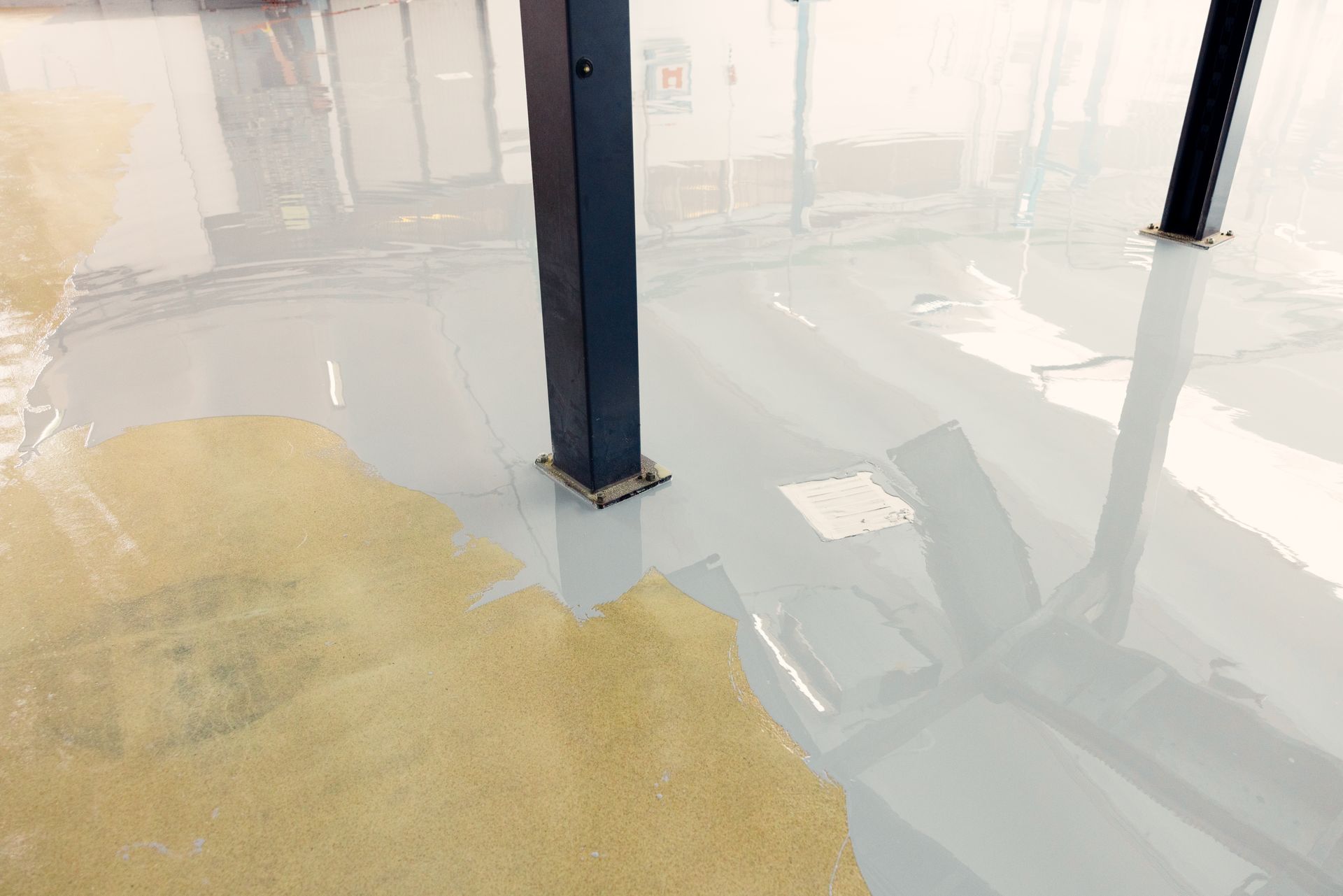
The installed system transforms bare or damaged concrete into a monolithic surface where the coating and substrate function as a single unit rather than separate layers. This chemical bond means impacts and loads transfer through the entire thickness instead of concentrating at a weak interface where coatings typically delaminate. Moisture vapor transmission from the concrete slab is managed through primer selection that either blocks vapor or allows controlled permeability depending on slab age and subsurface conditions.
Once cured, the floor surface resists the etching and staining that unprotected concrete experiences when exposed to battery acid from equipment, coolant drips, or daily washdown with industrial detergents. The coating fills surface porosity that traps contaminants and creates slip hazards, producing a cleanable surface where spills wipe away instead of soaking into the substrate. Maintenance intervals extend from weekly scrubbing and periodic resealing to monthly cleaning without surface degradation, and the embedded safety striping eliminates the annual repainting cycle required with standard traffic paint.
National Contracting Epoxy & Coatings evaluates equipment wheel loads, chemical exposure frequency, and existing slab conditions to determine system thickness and resin chemistry. Facilities with thermal cycling from ovens or freezers require flexible formulations that accommodate expansion without cracking, while operations with static loads from racking systems need high compressive strength to prevent indentation. Cure times are scheduled around production shifts to minimize downtime, with fast-cure systems available for operations that cannot afford extended closures.
Questions About Industrial Floor Systems
Manufacturing managers often want to know how these coatings perform under the specific stresses their operations create and what preparation the existing floor requires.
What determines if a concrete slab can accept industrial coating?
Surface moisture content and structural soundness dictate whether coating will bond, which is why substrate testing measures vapor emission rates and pull strength before installation begins.
How do chemical-resistant coatings differ from standard epoxy?
Resin chemistry is formulated to resist specific chemical families, so a coating that handles petroleum products may fail under acid exposure, making chemical inventory review part of the specification process.
When should safety striping be integrated versus painted on top?
Embedding striping during the coating cure creates markings that last the life of the floor system rather than requiring repainting every year or two as surface traffic wears through paint layers.
Why do some coated floors fail within months while others last decades?
Surface preparation quality determines bond strength, and inadequate profiling or incomplete contaminant removal creates invisible weaknesses where the coating separates under load even when the coating itself remains chemically intact.
What maintenance extends the service life of industrial coatings in El Paso facilities?
Routine cleaning with pH-neutral detergents prevents abrasive particle buildup that grinds into the topcoat, and addressing spills promptly prevents chemical exposure time from exceeding the coating's resistance threshold.
National Contracting Epoxy & Coatings provides system specifications based on your facility's equipment loads and chemical environment, ensuring the coating installed matches the operational demands it will face. Schedule a facility assessment to review substrate conditions and production requirements.